
On 18 May, Google announced a “new AI milestone” called Multitask Unified Model (MUM) capable of handling more complex search queries.
The search giant says its new technology breakthrough is 1,000 times more powerful than BERT and has the potential to solve one of the biggest problems people face when using a search engine: having to type multiple queries to get the information they’re looking for.
That’s a bold claim, considering BERT is only a few years old but Google’s Vice President of Search, Pandu Nayak, has already reviewed some of the new technology’s capabilities.
What is Multitask Unified Model (MUM)?
Multitask Unified Model (MUM) is built using the same Transformer architecture Google used to develop BERT, which uses neural language processing to improve the search engine’s ability to understand complex queries, translate between different languages and answer questions.
These are the same three key functions of MUM but Google says the new technology is 1,000 times more powerful than BERT.
“MUM has the potential to transform how Google helps you with complex tasks. Like BERT, MUM is built on a Transformer architecture, but it’s 1,000 times more powerful.” – Pandu Nayak, Vice President of Search at Google.
Nayak goes on to say that MUM “not only understands language, but also generates it. It’s trained across 75 different languages and many different tasks at once, allowing it to develop a more comprehensive understanding of information and world knowledge than previous models”.
So, aside from MUM being capable of understanding more complex queries, it can also crawl content in languages different from the original search terms and translate these to provide more relevant answers.
For example, if an English speaker wants to find out the latest updates about the Tokyo Olympics, MUM can source information from Japanese websites and translate this into English, assuming this content provides the most valuable answer.
How will MUM affect the search experience?
Pandu Nayak outlines three key ways that MUM will enhance the search experience for users and it all starts with understanding the meaning and intent of queries with greater accuracy.
#1: Answering complex queries with a single answer
As we mentioned earlier, Google understands that one of the biggest issues with search is that users often have to type in several queries to get the information they need – essentially asking multiple questions to get a single answer.
As Nayak explained when announcing the new technology:
“Take this scenario: You’ve hiked Mt. Adams. Now you want to hike Mt. Fuji next fall, and you want to know what to do differently to prepare. Today, Google could help you with this, but it would take many thoughtfully considered searches — you’d have to search for the elevation of each mountain, the average temperature in the fall, difficulty of the hiking trails, the right gear to use, and more. After a number of searches, you’d eventually be able to get the answer you need.”
MUM allows Google to understand that a user asking this type of question is comparing the two mountains and determine that details like elevation and trail information are important.
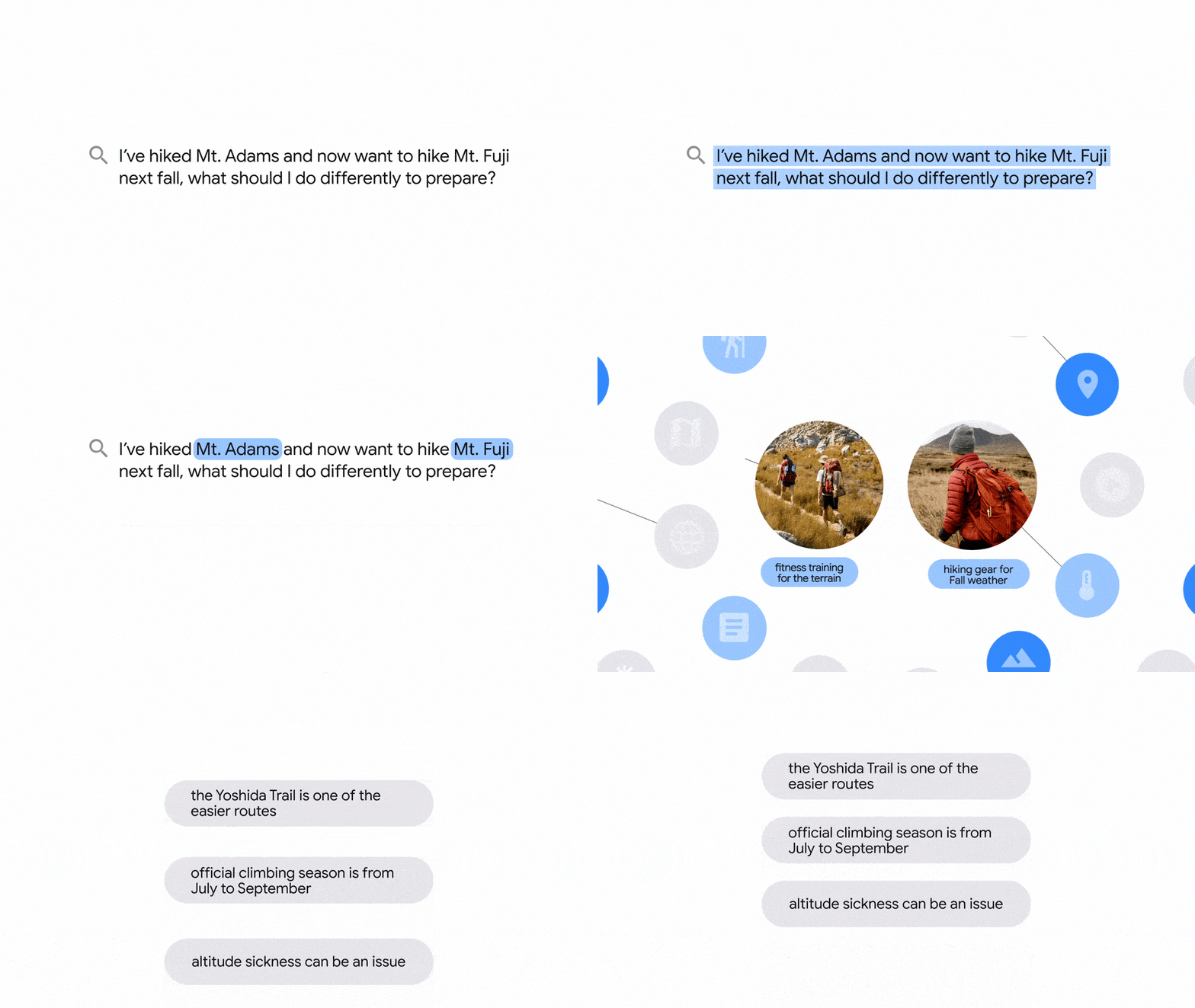
So, in the scenario above, Google could determine that someone with experience of climbing Mt. Amans in the US should be capable of scaling Mt. Fuji in Japan, given the similar elevation of the two mountains. It could also pick up on the fact that the autumn months fall in Japan’s rainy season and recommend equipment for wet weather, as well as suggest routes by sourcing information from content in English, Japanese and any other language with useful info to offer.
#2: Breaking language barriers in search
We’ve referenced the translation capabilities of MUM a couple of times already and this is one of the key strengths of the technology, according to Pandu Nayak.
“Language can be a significant barrier to accessing information. MUM has the potential to break down these boundaries by transferring knowledge across languages. It can learn from sources that aren’t written in the language you wrote your search in, and help bring that information to you.”
Nayak explains that it’s common that the best information for a query exists in content written in a different language from the original keywords but Google currently isn’t capable of bridging this gap. Going back to the Mt. Fuji example, if the most helpful information about the landmark is written in Japanese (as you would expect), users are unlikely to find it unless they type their query in Japanese.
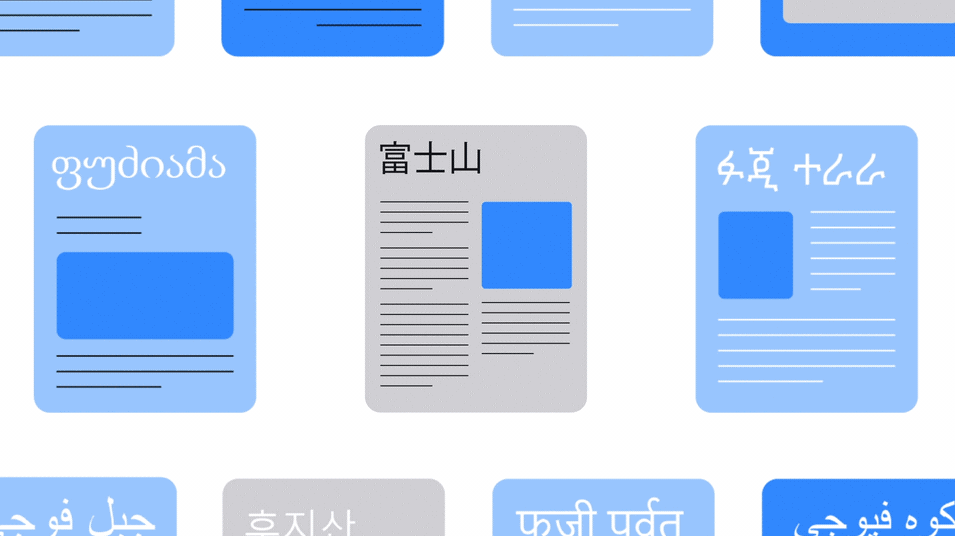
MUM changes all of this by allowing Google to break through language barriers and access content in other languages. First, the technology has to understand the true intent of the query and, then, it uses machine translation to convert the query into other languages and find the most relevant content to the query, irrespective of language.
Finally, Google can translate this information into the language of the original query.
So searchers looking to find the best views on Mt. Fuji or the best locations to take pictures of the mountain can access tips from locals and previous visitors from other countries.
#3: Understanding information from multiple content types
The other standout feature of MUM is that the technology is multimodal and this means it’s capable of extracting and understanding information from multiple content types. Google has been working on AI image recognition and similar technology for years and it seems MUM could integrate this technology into Google Search.
As things stand, MUM is only capable of extracting information from text and image content but Pandu Nayak says the technology could soon learn to do the same from video and audio content.
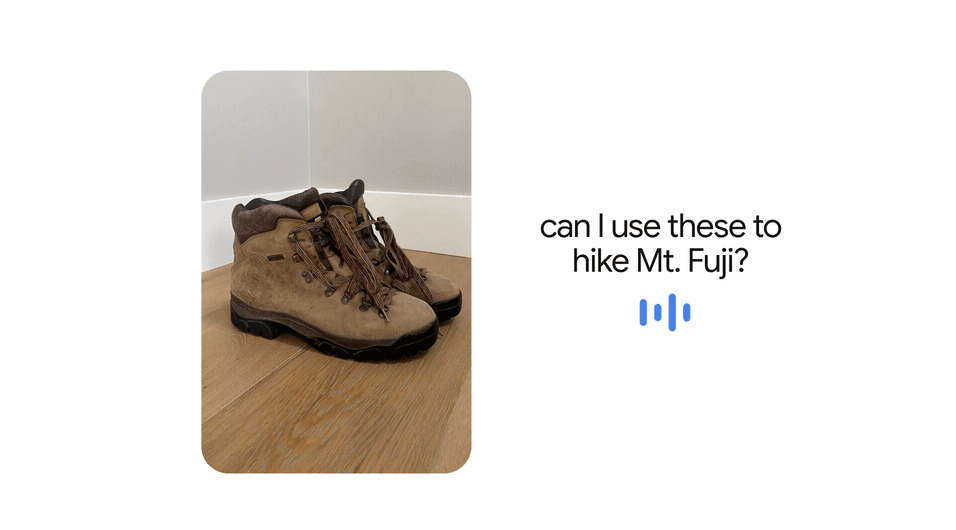
He suggests users could use Google Assistant to take a picture of their walking boots and ask it whether they’re suitable for climbing Mt. Fuji. He doesn’t go into detail about how Google will answer this question but, presumably, the technology uses image recognition technology to match the boots to other images of the same product, identify the specific pair of boots and, then, crawl reviews and other content – across 75 different languages – and compile an answer for the user.
Eventually, Nayak suggests the technology could even extract information from video reviews and other formats to potentially find videos of people using the very same boots to climb a mountain with similar elevation or conditions to Mt. Fuji.
When is MUM rolling out across Google Search?
Google says Multitask Unified Model (MUM) will gradually roll out over “the coming months and years” and it’s obvious this is a technology that will become more sophisticated over time. Much like BERT, Google says it will test the new technology over an extended period to avoid the introduction of any bias into its algorithm. Given the rhetoric surrounding this new technology, it sounds like MUM will be one of the most important influences on search rankings at some point in the near future – although we’re speculating on this.
Again, BERT initially played a small role in search results when it first rolled out but the technology is now used for almost every query in English.
In little more than a year, BERT went from being applied to around 10% of all queries in English to almost 100% and we expect to see a similar rollout path for MUM, even if it takes longer for the technology to influence most searches.