
At a glance, Google Trends might not look like the most advanced marketing insights tool – more of a second-rate backup to the Keyword Planner in Google Ads. The thing is, Google Trends was never really designed for keyword research (even if it is a useful tool for it) and, as the name suggests, its primary focus is analysing search trends.
For this purpose, Google Trends is a highly capable tool that you can use to capture powerful marketing insight. In this article, we look at seven ways you can use this free tool to inform your marketing campaigns and make better business decisions.
#1: Spot emerging trends
Google Trends allows you to monitor changes in search interest over time, which means you can use the tool to spot emerging trends in your industry. The coronavirus outbreak changed every aspect of our lives and this is reflected in shifts of interests – such as the dramatic rise in searches for “staycation” amidst all the ongoing travel uncertainty.
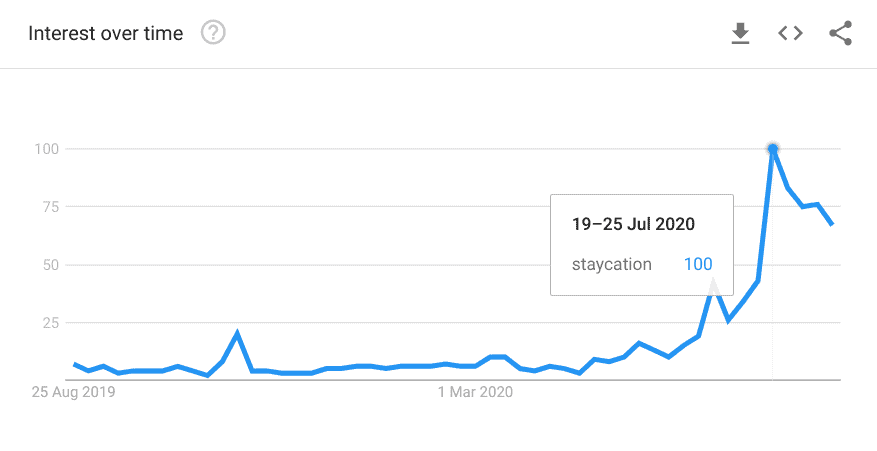
As you can see from the screenshot above, searches in the UK for “staycation” rocketed after lockdown was announced and peaked between July 19-25. Since then, interest has gradually declined as international travel has slowly started moving again. This is a good example of how you can use Google Trends to spot emerging trends and, crucially, gauge their longevity.
Travel brands expecting people in the UK to abandon foreign holidays due to COVID-19 might see this data and realise there’s still a market for international travel. Likewise, this data also suggests that putting all of their advertising budget into staycation campaigns could be a short-lived strategy.
#2: Measure the impact of external events on your business
Spotting trends is one thing but understanding how they emerge and measuring the impact of external events upon your business is something else entirely. For example, let’s take a look at how search volumes for “Tokyo Olympics 2020” relates to searches for hotels and flights to the Japanese capital.
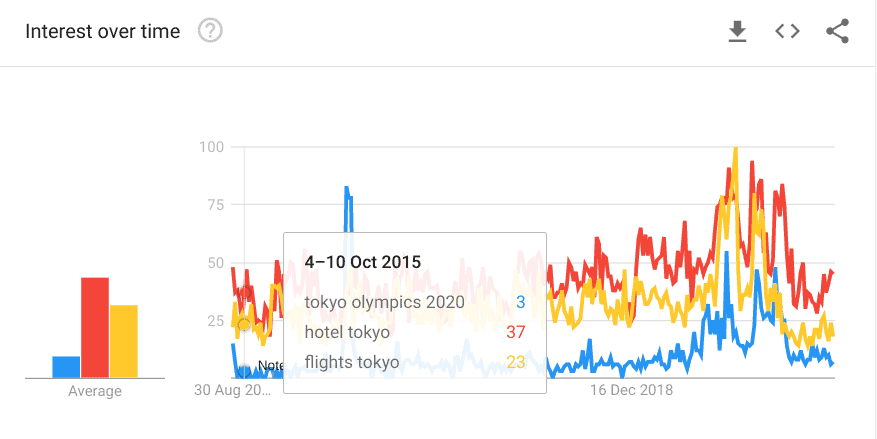
Aside from a gradual correlative increase of interest across each search term, you can also see clear peaks in interest in recent years, suggesting a significant increase in interest of travelling to Tokyo for the Olympic Games.
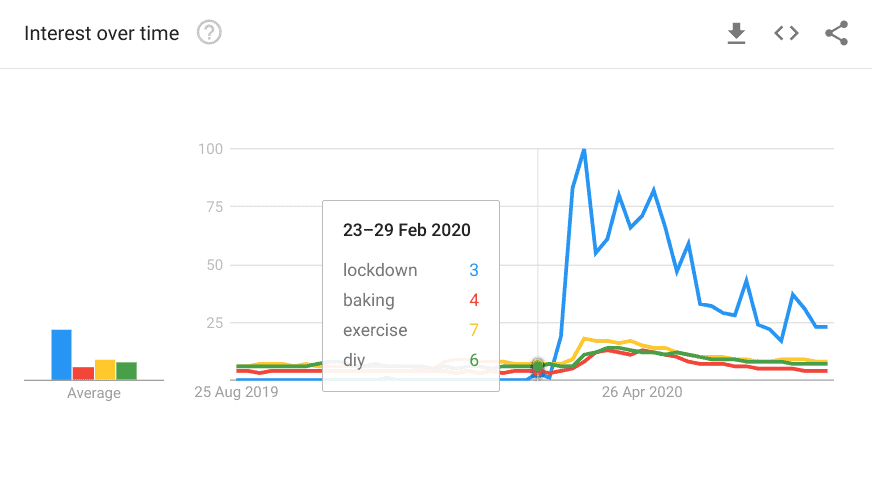
The same approach can be used to attribute search trends related to lockdown, as shown in the visualisation above.
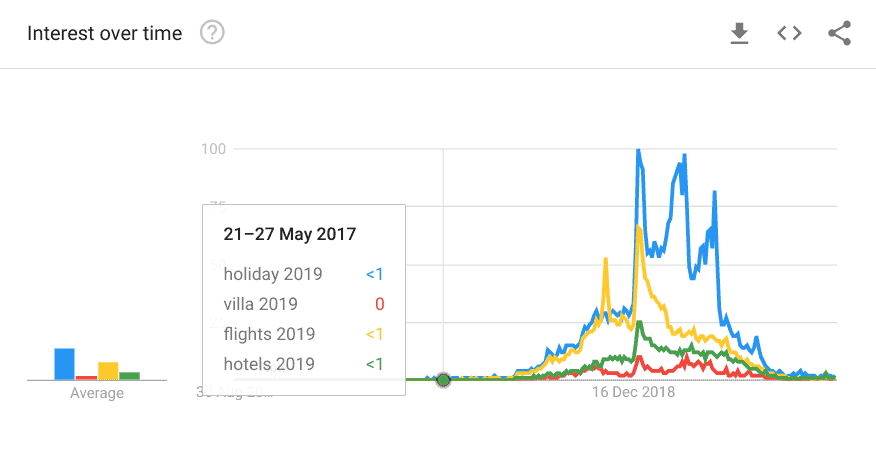
By searching for specific years, you can understand when people start planning for certain purchases, too. For example, the graph above shows that people started planning their 2019 holidays in the early stages of 2017, which gives you an idea of when you need to start inspiring travel plans – as well as how long it might take for people to actually book.
#3: Measure downward trends
Staying on the travel theme for a moment, downward trends are another key insight every business needs to understand about their industry. If you look at searches for “cheap holidays,” “cheap flights,” and “cheap hotels” since 2004, you can see a noticeable decline across all three terms.
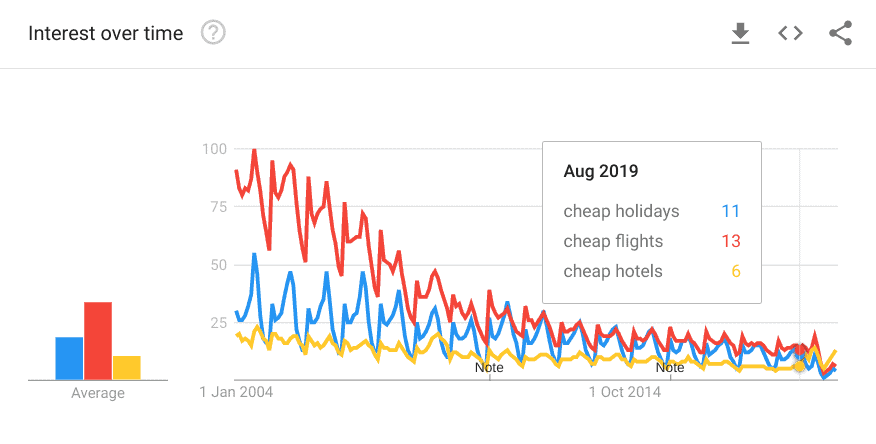
If you cross-reference this data with the generic search term “holiday,” you can see that interest has remained quite steady over the same period.
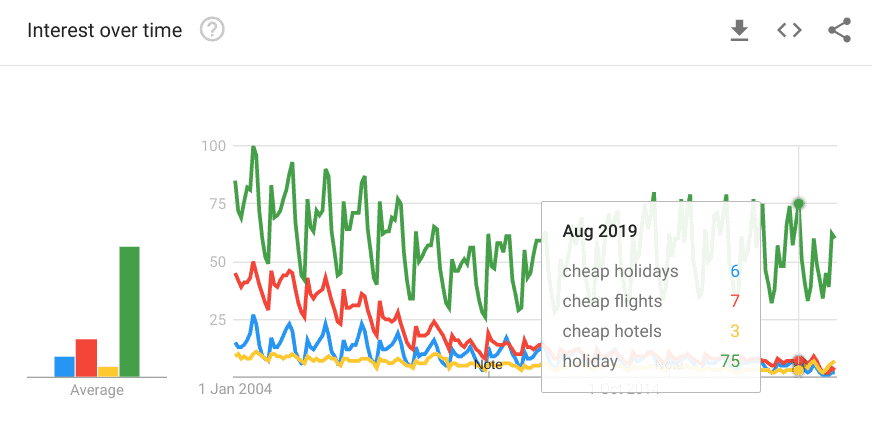
Interest in travel clearly hasn’t diminished but the priority for travellers naturally evolves over time and Google Trends helps you keep on top of the interests that matter most to your target audiences. Travel brands that had great success in the past by competing on low prices might find this strategy is less effective now and find a new focus for their campaigns.
#4: Measure consumer priorities
The coronavirus outbreak and subsequent lockdown provide an opportunity for marketers to test the importance of consumer priorities. Much like the staycation trend, online shopping boomed during lockdown and home delivery became a crucial service for consumers unable to visit stores as normally.
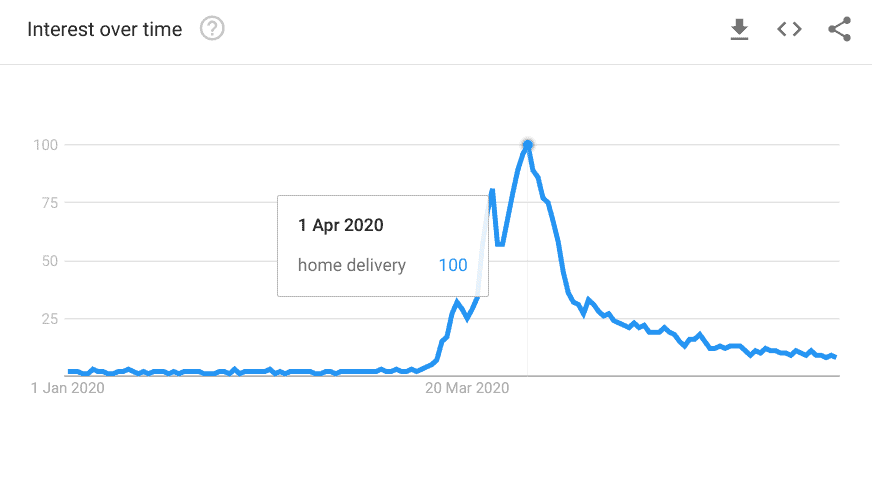
At the same time, “near me” searches declined as people spent the majority of time at home and local businesses closed their doors. However, we’re now seeing a resurgence of “near me” searches that exceed pre-lockdown levels while searches for delivery are significantly down.
This data allows us to test and measure the longevity of consumer priorities. Clearly, “near me” searches remain a staple for local businesses and this is a trend that will stand the test of time. Delivery services may not be the same priority they were during the height of lockdown but interests have settled at a higher rate than pre-lockdown levels, making this a bigger priority for consumers – at least for now.
#5: Find seasonal peaks in interest
Most industries experience seasonal peaks throughout the year but a lot of businesses would be surprised by when interest in their business is actually highest. Take the wedding industry as an example, where ceremonies in the UK are generally favoured in the summer months.
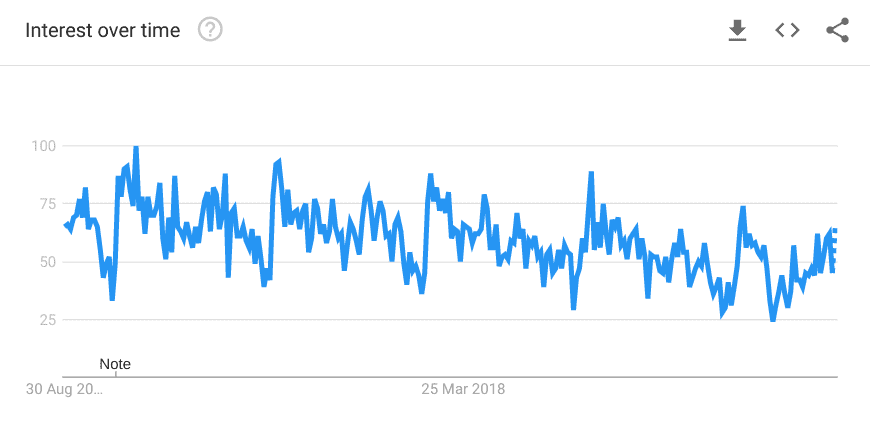
A wedding photographer would be correct in thinking interest in their services is high during the summer. However, the highest peak of interest throughout the year tends to be during the peak of winter, between January and March, before interest typically drops ahead of a smaller peak in the summer.
So photographers and other businesses in the wedding industry may actually benefit from having ad spend highest during the winter months.
#6: Find which locations to prioritise
Location targeting is one of the most important strategies for any advertising campaign and Google Trends helps you pinpoint the most promising places. If your business only operates in the UK, then, of course, you’re going to want to exclude locations outside of the UK in your advertising campaigns but why end it there?
With Google Trends, you can find out which parts of the country have the strongest interest in your products/services and create localised campaigns for them.
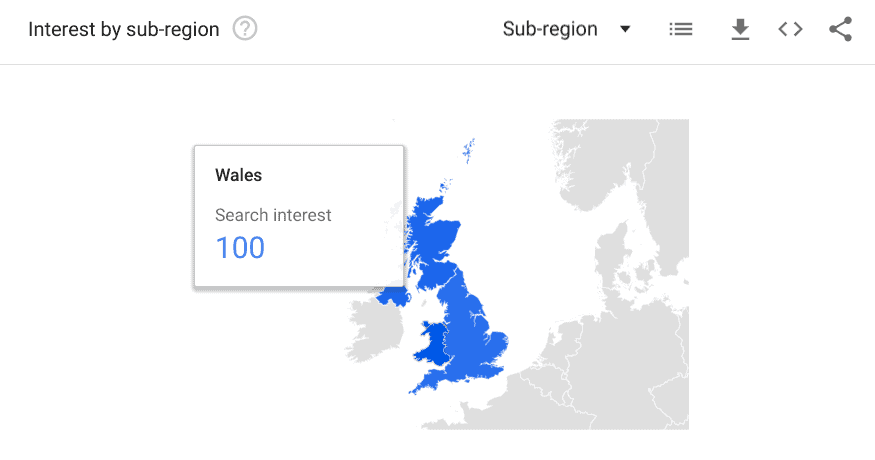
First of all, you can compare search interest across England, Ireland, Scotland and Wales by looking at the Interest by sub-region section. By default, Sub-region is selected in the dashboard but you can also compare interest across cities by switching to the City view.
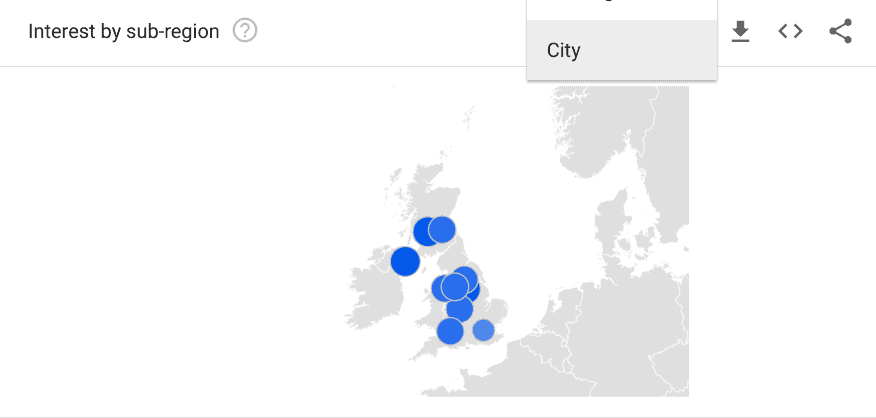
This gives you an idea of where search interest for your business is strongest, allowing you to create separate campaigns for each location and managing bids to prioritise the areas of highest potential.
#7: Measure interest vs competitors
Every business needs to measure its performance against the competition and tracking the comparative interest in your brand is a key indicator. Google Trends makes it easy to measure and compare interest in your brand against your competitors while showing hoe performance changes over time.
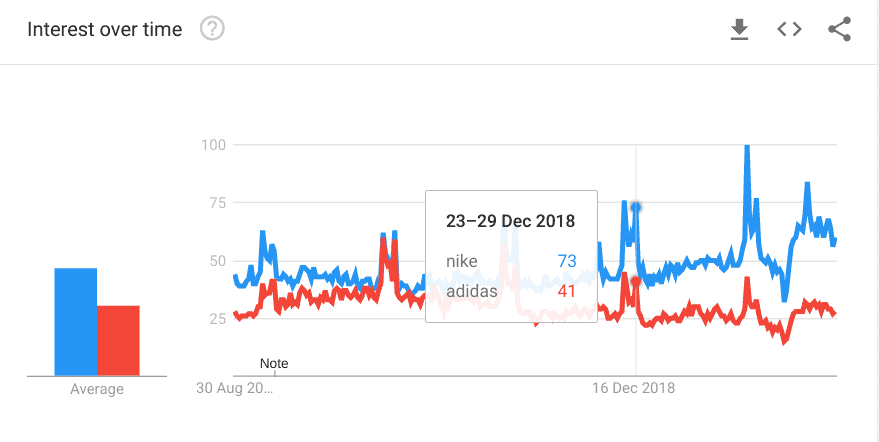
Once again, you can compare interest across different locations to see where smaller battles are being won/lost and prioritise your branding campaigns accordingly. You can also check changes against external events and other factors to try and pinpoint causes for changes in interest.
Most importantly, you can use this data to see where significant gaps are opening up and determine where drastic action needs to be taken.
Google Trends is a mightier tool than you might first realise and you can use this free tool to extract valuable insights. Knowing how to use the tool effectively will help you make better marketing and business decisions. If you would like to know more about using Google Trends as an insights tool, you can reach out to us on social media or speak to our search marketing team by calling 0161 870 2580.