
Last week, Google published an article on the Merchant Center support website, calling upon retailers to use Smart Shopping campaigns this holiday season. The search giant wants you to use this automated campaign format to “respond to real-time holiday demand” and the message is clearly aimed at account holders who haven’t yet tried smart shopping campaigns for themselves.
So, in this article, we look at the pros and cons of smart shopping campaigns and why you may want to (or not) use them in your holiday marketing strategy this year.
What are Smart Shopping campaigns?
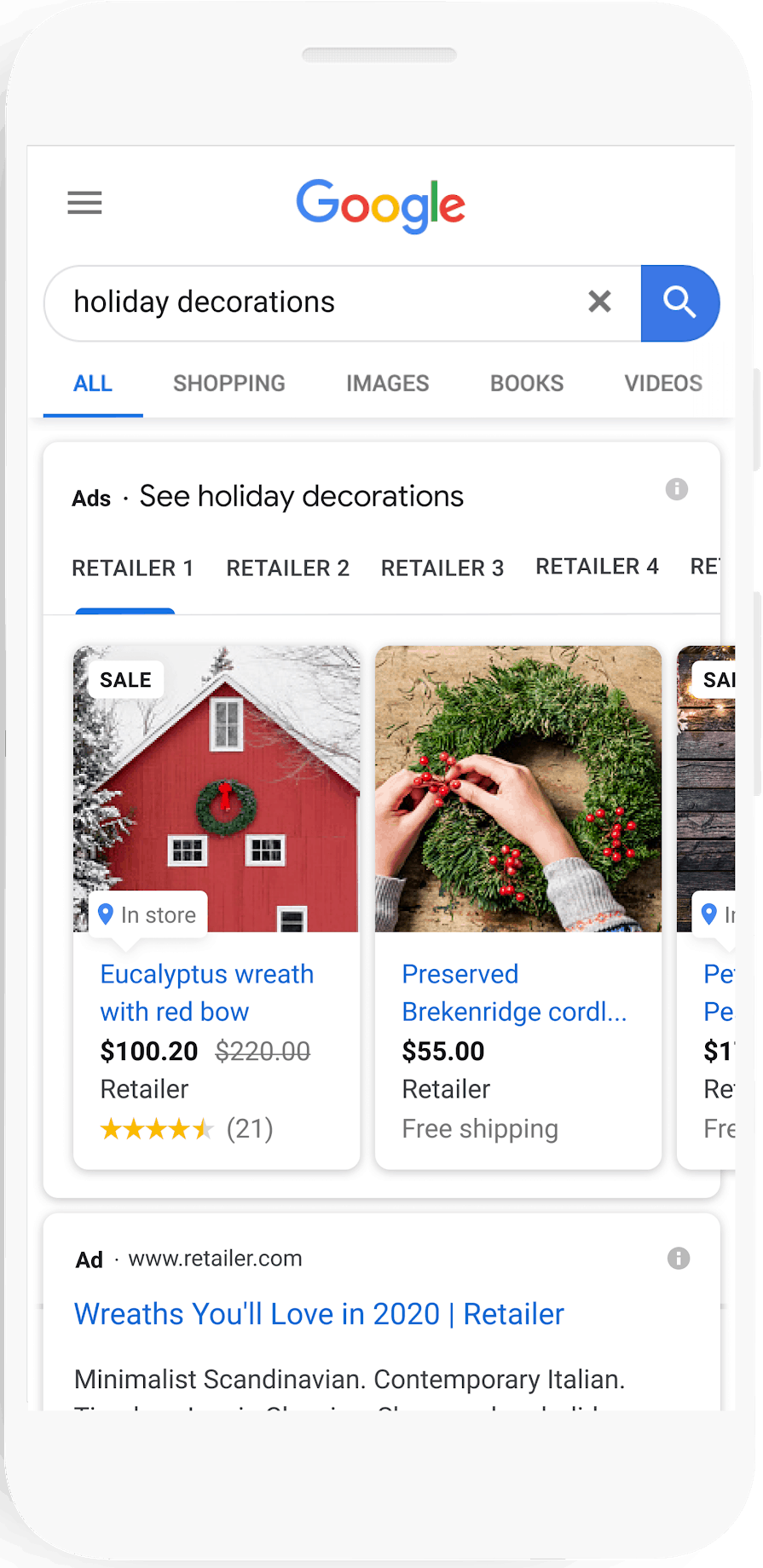
Smart Shopping is a relatively new, automated campaign format that aims to reduce the manual workload of managing shopping campaigns in Google Ads. As Google explains:
“With Smart Shopping campaigns, your existing product feed and assets are combined with Google’s machine learning to show a variety of ads across networks. Our systems will pull from your product feed and test different combinations of the image and text you provide, then show the most relevant ads across Google networks, including the Google Search Network, the Google Display Network, YouTube and Gmail”
Basically, Google pulls the data from your product feed and tests different variations of images, descriptions and attributes to find the most effective combination for you. The search giant plugs into its vast haul of search and campaign data to determine which combinations should work for your campaigns, using machine learning to constantly improve as it applies more data to your tests.
This process is fully automated so it all takes place in the background and you simply let Google take care of campaign performance.
Here’s a cheesy promo video for good measure:
Google finds that retailers using Smart Shopping campaigns achieve 20% more conversion value for roughly the same ad spend while cutting down on the time it normally takes to manage and optimise Google Shopping campaigns.
With Google showing the right products to the right people, at the right time, Smart Shopping campaigns are designed to help you get results faster and respond to changing consumer demands as they evolve – the latter being the key message in Google’s suggestion for using them this holiday season.
The pros and cons of Smart Shopping
Google makes a good case for using Smart Shopping campaigns over the festive period (or any time of year, for that matter) but there’s no such thing as a perfect, automated campaign format. As with any feature of this nature, there are pros and cons to consider – some of which Google isn’t going to openly publicise.
The pros of Smart Shopping
Let’s start with the pros of Smart Shopping campaigns, which mainly come down to automatically achieving a certain level of performance without the hours upon hours of manual optimisation.
- Speed: The biggest benefit to using Smart Shopping campaigns (as with most automated features in Google Ads) is speed. You let Google take care of the hard work so you spend less time playing around with campaign settings.
- Simplicity: If you find Google Ads overwhelming, Smart Shopping campaigns make it easy to get results without any technical understanding.
- Performance: For account holders with limited knowledge or advertising experience, Smart Shopping campaigns may achieve higher performance than you’re initially able to.
- Coverage: Smart Shopping campaigns show your ads across the Google Search Network, Display Network, YouTube and Gmail, giving you a lot of coverage without having to put the work in yourself.
- Automated optimisation: The key selling point of Smart Shopping campaigns is that they optimise themselves using Google’s machine learning technology and automatic testing to find the best ads and impressions for your objectives.
Now, you can’t truly rely on an algorithm to find the best combination of ad resources and only show them to users who are about to hit the buy button. Smart Shopping isn’t going to create the perfect campaigns and solve all of your advertising problems but it might achieve enough performance in a short enough time-frame to add value to your strategy.
The cons of Smart Shopping
At the opposite end of the spectrum, the drawbacks to Smart Shopping are mostly related to the lack of control and data you typically get from automated campaigns.
- Loss of control: Smart Shopping means surrendering control of your campaigns and, to some extent, your ad budget to Google.
- No negatives: You also lose the ability to add negative keywords to your campaigns and manually prevent your ads from showing for unwanted search terms.
- Limited reporting: Another issue with Smart Shopping campaigns is the lack of data and reporting, which means you never really see what works and why.
- Attribution: The same lack of data also makes it difficult to attribute success to specific campaigns.
- No product differentiation: Google encourages you to target all available products with Smart Shopping campaigns, meaning you can’t optimise separate campaigns for different product categories or attributes, such as in-demand items, limited stock, high-profit products, etc.
- Performance: Although Smart Shopping can achieve a certain level of performance, you should always be able to get better results yourself by manually optimising your own campaigns – it’s simply a question of whether you have the time, inclination and desire to do so.
At the end of the day, Smart Shopping is an automated campaign format that relies on algorithms and we can only expect so much from it. While it has its uses it also has its limitations and it’s important that advertisers understand both before deciding whether to use Smart Shopping for themselves.
Should I use Smart Shopping campaigns this holiday season?
As with all questions of this nature, the answer depends on your needs and expectations from Google Ads. If you’re completely new to Google Ads, or even, Google Shopping, then Smart Shopping campaigns can provide a valid entry point that gets things moving for you until you’re ready to start taking over for yourself.
Just keep in mind that Smart Shopping campaigns use automated bidding strategies and Google will aim to spend all of your budget to achieve the best performance it can.
Also, nobody is forcing you to choose between only using Smart Shopping campaigns and never using them. One of the main drawbacks to Smart Shopping is that you can’t optimise campaigns for different product types – eg: top sellers, seasonal goods, high-profit products, etc.
However, you can manually create campaigns for these product types and then use Smart Shopping for all of your other products if you want to retain control over your most important campaigns while letting Google take care of the rest.
Again, you’re never going to truly maximise performance across all campaigns with this approach, but it’s a case of weighing up performance vs convenience.
Another possible use case for Smart Shopping campaigns might be if you’re expanding into a new market and you don’t have any existing data to guide your campaigns. You may want to tap into Google’s insights and let it get you over the initial bump, especially as consumer habits are so different during the holiday period and, potentially, even more so than usual this year.
Of course, you sacrifice building up your own library of data by using Smart Shopping campaigns but it all comes down to choosing your priorities.
Will you use Smart Shopping campaigns this holiday season?
Google likes to sing the praises of Smart Shopping campaigns but it’s not quite so keen on mentioning its limitations. At the same time, a lot of marketers insist that it’s a feature only amateurs or new businesses/advertisers should use to get things started. In fairness, this is the best reason to use Smart Shopping campaigns – either because you don’t have enough Google Ads knowledge to optimise campaigns for yourself or you simply don’t have the time.
However, there are legitimate reasons to use Smart Shopping campaigns, even for more experienced businesses and advertisers – as long as you understand the drawbacks.
In an ideal world, you would stay clear of any automated features and retain full control over your campaigns, bids and optimisation. If you truly want the best performance, this is the approach you need to take, even if it requires time and knowledge in itself that could take years to develop.
Luckily, there’s always the third option of using a specialist PPC agency like ourselves to handle all of the manual work for you. This way you get top performance while maintaining full control and access to campaign data, allowing us to determine what works and why – so we can apply these findings to future campaigns and constantly optimise for better performance.