
Back in May, Google announced a “new AI milestone” called Multitask Unified Model (MUM) that’s capable of handling more complex queries and transforming the way users engage with search. At the time, Google said the new technology is 1,000x more powerful than BERT and showcased some of the potential use cases.
Now, the search giant is offering a glimpse of what this new search experience will look like for Search users. Which, in turn, shows marketers and advertisers how users will engage with content and the kind of touchpoints brands need to target to ensure they’re discoverable at the key moments.
Google stepping into the future with new AI technology
At the heart of Google’s new search experience, is the Multitask Unified Model (MUM) technology it announced back in May. Google hasn’t revealed the specifics of how this new technology works but the multitasking element is evident in its ability to complete several tasks in a very short space of time.
For example, current searches are generally limited to the same language of the user’s query but MUM is able to translate queries, find content in dozens of languages and translate information to match the original query.
So, if a user types a query like “Japan covid-19 entry requirements,” MUM would allow Google to access information in English, Japanese and other languages where it’s able to find relevant information. It can then translate the most relevant info into English with its machine learning translation machine.
It can also detect nuances in conversational queries and match relevant information, such as comparing the height of different mountains and weather patterns for any seasons specified. 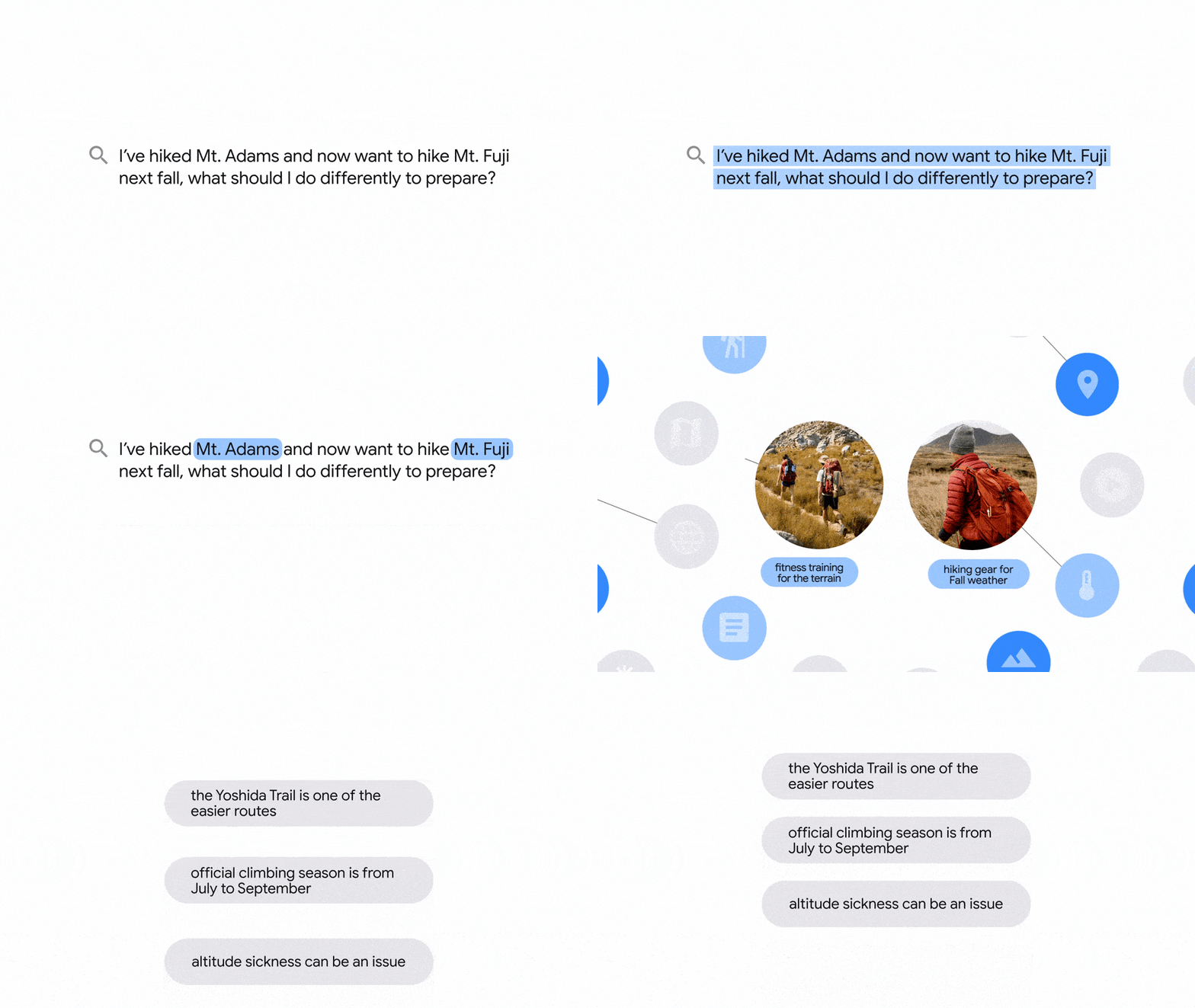
Another innovation Google announced in May was users being able to use Google Lens to take pictures of items and match them in Google Search. For example, they might take a picture of a product and search for the instruction manual online or spare parts to find a match.
Google is now giving us a glimpse of what this could look like in the real world with some everyday scenarios.
“In the coming months, we’ll introduce a new way to search visually, with the ability to ask questions about what you see. Here are a couple of examples of what will be possible with MUM.”
In one instance, it imagines someone reading a magazine or a catalogue where they see an item of clothing they like and they want to find similar items. Maybe it’s a fragrance ad but the shirt has caught this person’s attention or perhaps they want the same style on a different item of clothing.
With Google’s new search experience, users will be able to use the Lens app on their phones to capture a shot of the shirt and add a question to the query, such as “socks with this pattern”.
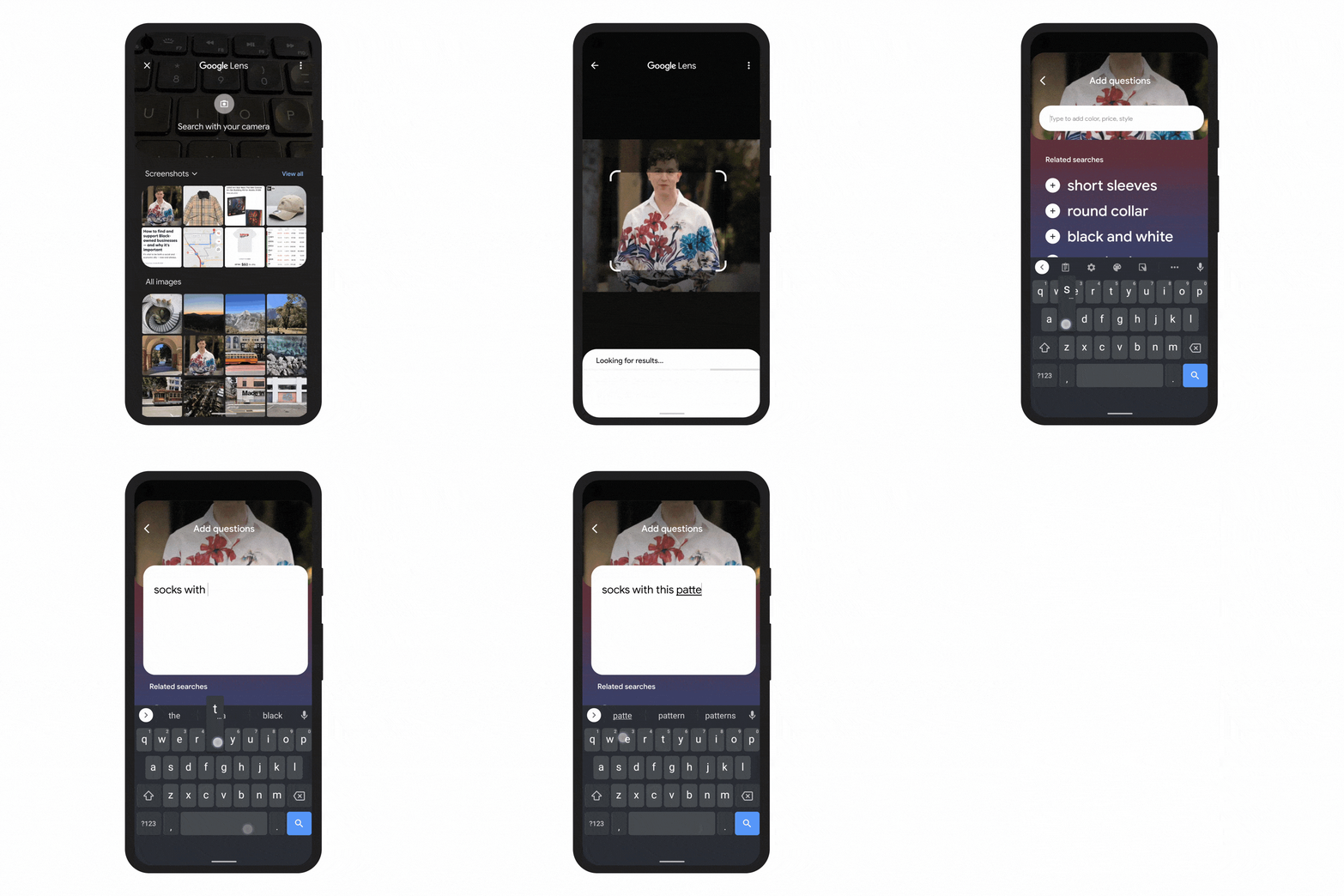
Google say this functionality helps when people are “looking for something that might be difficult to describe accurately with words alone,” such as a pattern or style they don’t know the name of.
Another scenario Google puts forward is where someone needs to fix something and they don’t know the name of the specific part. Instead of trying to find the name of the part themselves, they can take a picture of it using the Lens app and simply add the query “how to fix” and Google will identify the part and match their query with guides and tutorial content on how to fix or replace it.
A new look for Google Search, powered by AI
As well as new functionality, Google is redesigning search to incorporate AI into sessions, creating a more personalised experience. This personalisation isn’t based on individual user data but a greater contextual understanding of the user’s query and how other users explore the same topic.
For example, if someone types for “acrylic painting,” Google has huge amounts of anonymised data from previous sessions for the same query, allowing it to shape the results page to suit the expectations of the user.

As this is a broad query, Google can show a list of related topics and “Things to know” to help users explore the subject and refine their focus of interest. This is also a highly visual topic so Google might return more video content or step-by-step guides with visual illustrations.
Google says it can identify more than 350 topics related to something like acrylic painting and help users find their way through the subject, based on their specific interests.
To help users navigate topics with greater control, Google will also introduce a two-way feature for refining searches to more specific queries or broadening the search if they want to get less specific.

This allows users to refine, explore and broaden again if they want to go back to a more general list of results. They can repeat this process until they find the avenue they want to explore in more detail – as many times as they like, without needing to manually type new queries.
Where relevant, the experience will be more visual than the Google Search sessions we’re currently used to with results featuring images and videos to make search more browsable.

Even though there’s no social element to this redesign, the scrolling experience makes this new search feels much closer to platforms like Twitter – provided publishers are optimising their content for it (more on this later).
A more helpful & engaging Google Search
Google says the new AI search experience is all about making the platform more useful and helping users get more valuable from the wealth of information available on the internet. From the glimpses we’ve already have of MUM’s capabilities, it certainly looks like Google will be a more powerful tool for finding relevant info for challenging queries.
We’ll be interested to see what kind of a success rate the Lens integration achieves and what the (presumably many) limitations are. Either way, this feels like the start of something significant that will continue to develop and advance over the coming years.
It already looks like the biggest overhaul to the search experience in Google’s history – a leap forward (or, at least, an attempted leap) rather than the incremental updates we’ve seen over the past couple of decades.
“Today, there’s more information accessible at people’s fingertips than at any point in human history. And advances in artificial intelligence will radically transform the way we use that information, with the ability to uncover new insights that can help us both in our daily lives and in the ways we are able to tackle complex global challenges.”
Clearly, this isn’t only a move designed to improve search informationally, but also an overhaul of the search experience to make it more engaging. There’s a strong emphasis on guiding users through longer search sessions, creating a more browsable (and navigable) experience and retaining people’s interests across multiple pages and queries.
This is a significant stride away from short manual searches towards a platform that encourages users to explore, scroll, click and explore some more.
Are you ready for the new Google Search?
The new Google Search is going to change the way users engage with content and the kind of content publishers will need to create to capture people’s attention as more emphasis is placed on exploration than manual search.
If your SEO and content marketing strategies aren’t ready for this change, you can get a head start by calling our search marketing team on 0161 870 2580, emailing us at info@hotclickmarketing.co.uk or catching us on Twitter via @hot_click with any questions.