
As of May 2021, Google will introduce a new set of Core Web Vitals into its core search algorithm, alongside a new ranking factor called page experience. We’ve written about the page experience signal before and how it’s related to Core Web Vitals but, in this article, we want to focus specifically on the latter.
Today, we explain what Core Web Vitals are, how they’re going to affect your search ranking and explain how you can optimise your website for them.
What are Core Web Vitals?
Core Web Vitals are part of a new initiative from Google, one that aims to encourage website owners to improve the experience of their pages and provide better tools to measure and optimise them.
Here’s what Google engineer Philip Walton has to say about the initiative:
“Optimising for quality of user experience is key to the long-term success of any site on the web. Whether you’re a business owner, marketer, or developer, Web Vitals can help you quantify the experience of your site and identify opportunities to improve.”
He acknowledges that “site owners should not have to be performance gurus in order to understand the quality of experience they are delivering to their users,” before adding: “The Web Vitals initiative aims to simplify the landscape, and help sites focus on the metrics that matter most, the Core Web Vitals.”
Core Web Vitals include three metrics although Google says this could change as the initiative evolves over time.
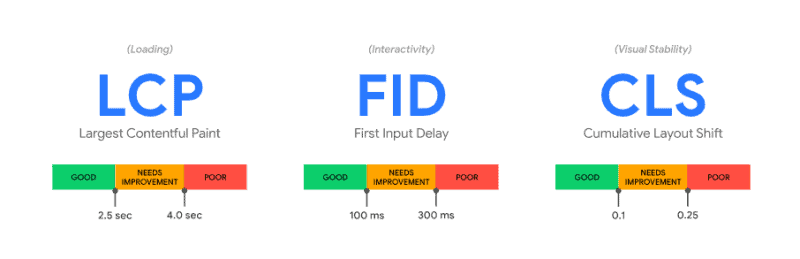
These three metrics are:
- Largest Contentful Paint (LCP): This measures loading times by tracking how long it takes for the largest element above the fold (i.e., what you see on the screen without having to scroll down) to render in full.
- First Input Delay (FID): This measures interactivity based on how long it takes for interactive elements to trigger after the user’s initial click.
- Cumulative Layout Shift (CLS): This measures visual stability by detecting any elements that unexpectedly move or change size after the page has loaded.
Admittedly, those aren’t the catchiest names for a set of new metrics, but they are a genuine leap in measuring user experience. We already know that Google looks at a range of signals to gauge the quality of page experience and, collectively, uses these in its core algorithm, but Core Web Vitals provide a specific set of metrics for measuring user experience.
More importantly, they provide website owners with specific benchmarks to aim for and the tools to measure and optimise pages to achieve them.
Are Core Web Vitals ranking factors?
Google is implementing Core Web Vitals into its core algorithm in May 2021 so, yes, these will become ranking factors. This means every website owner should optimising for these metrics at the earliest date possible.
The Core Web Vitals will roll out as part of a new ranking signal, called page experience, which looks at the following seven signals:

- Loading (Largest Contentful Paint)
- Interactivity (First Input Delay)
- Visual Stability (Cumulative Layout Shift)
- Mobile Friendliness
- Safe Browsing
- HTTPS
- Interstitials / Popups
So, the first three signals that contribute to page experience are the Core Web Vitals we’re talking about. The four remaining signals are all well-established ranking factors.
Combined, these signals help Google score the quality of user experience on your pages and provide a crucial ranking boost for high-scoring pages.
How do I optimise for Core Web Vitals?
The Core Web Vitals metrics use new measurement systems to determine loading times, interactivity, and visual stability.
While you might be used to optimising pages for speed, Google will now use a different method to measure loading times, while tracking interactivity and visual stability with dedicated metrics for the first time.
So, let’s inspect these metrics one by one.
Largest Contentful Paint (LCP): Loading times

Largest Contentful Paint (LCP) measures the loading times of your pages, using a new system of measurement. Instead of simply tracking the time it takes for the first element to load, LCP tracks the time it takes for the largest image of text block visible within the viewport (above the fold) to load.
Google wants these elements loading within 2.5 seconds, and this is the benchmark you need to aim for to get the Web Core Vitals ranking boost.
Anything longer than 2.5 seconds needs improvement, while loading times longer than 4.0 seconds is poor. So, make sure those hero background images aren’t holding you back.
You can find out more about Largest Contentful Paint here.
First Input Delay (FID): Interactivity

First Input Delay (FID) measures the interactivity of your pages, specifically tracking the time it takes for interactive elements to respond after a user clicks them – eg: links, buttons, UI elements, etc.).
Google wants to see response times of 100 milliseconds or less with anything longer needing improvement and anything slower than 300 ms getting a red flag.
Cumulative Layout Shift (CLS): Visual Stability
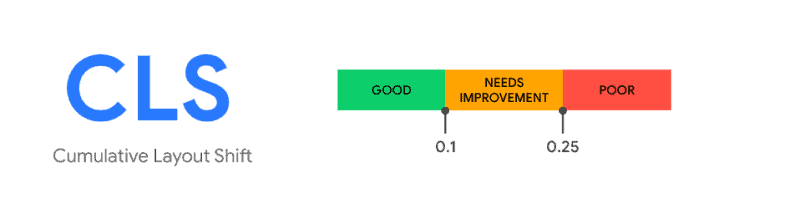
Another common UX problem Google wants to tackle is visual instability. This happens when page elements jump around or layouts shift after they’ve initially loaded. Aside from being disorientating, visual instability can result in users clicking the wrong elements by mistake – such as clicking the wrong link in a navigation menu or perhaps something a little more damaging:
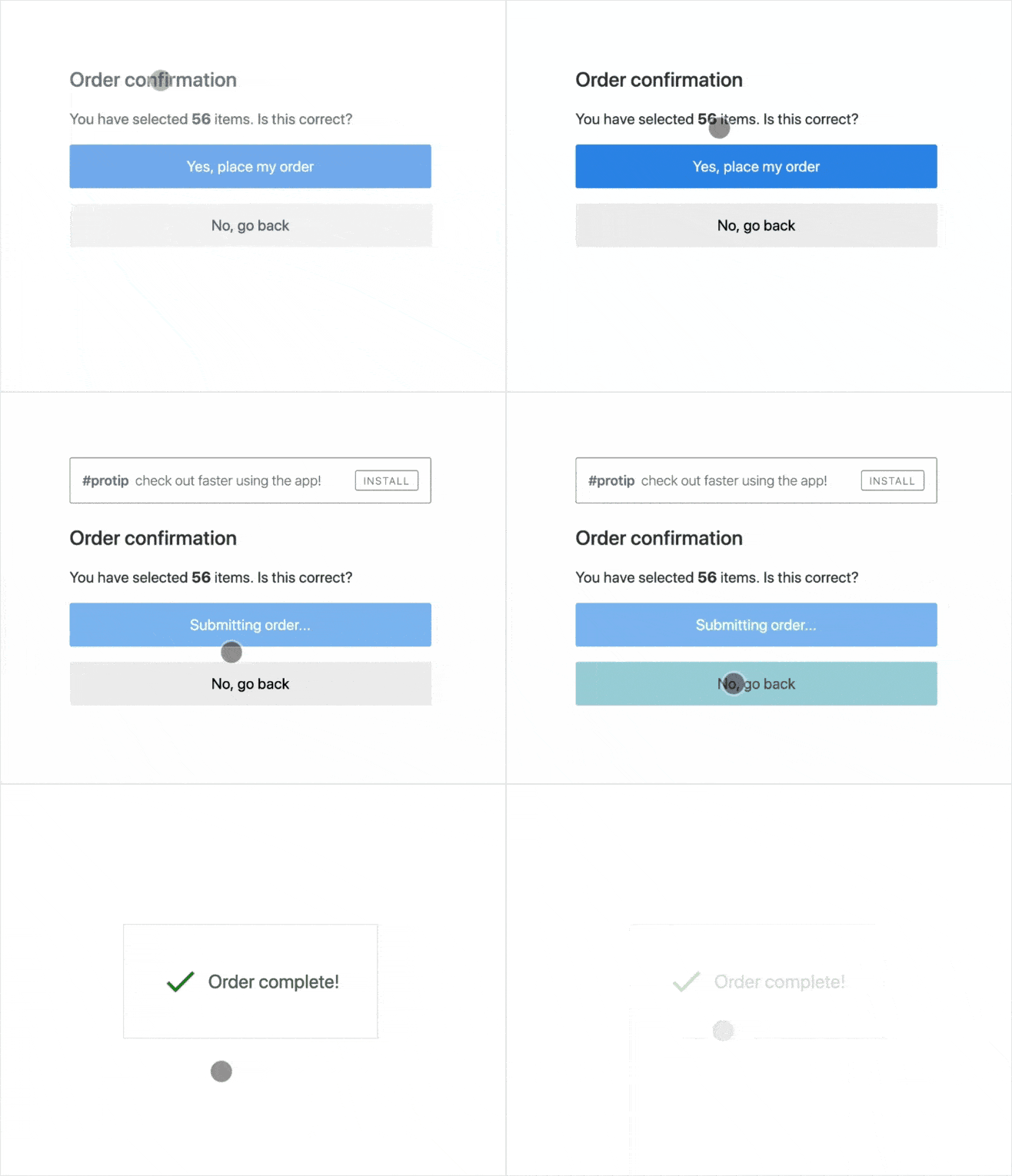
The Cumulative Layout Shift (CLS) metric provides a measurement for Google to identify visual instability by tracking on-page elements to detect any movement or changes in size after they’re rendered in the browser.
Google then calculates a layout shift score, based on the viewport size and the movement of unstable elements between two rendered frames.
You can find out more about Cumulative Layout Shift (CLS) here, including how Google calculates your layout shift score, and you’re going to need to aim for scores under 0.1 to get the full ranking boost from Core Web Vitals.
Get optimised before May 2021
With Core Web Vitals integrating with Google’s core algorithm in May 2021, there’s not a lot of time left to get your website in order. The good news is Google has introduced new tools and adapted existing ones to help you measure the performance of your pages for each Core Web Vitals metric:
Field tools
- Chrome User Experience Report
- PageSpeed Insights
- Search Console (Core Web Vitals report)
- web-vitals JavaScript library
Lab tools
For details on how to measure each of these metrics in your tools of choice, you can follow the official documentation on these pages:
User experience continues to play a bigger role in search rankings and Google explicitly states that the Core Web Vitals metrics will develop. It means we could see new metrics added in the future, or have tougher benchmarks to meet.
So now is the time to optimise for Core Web Vitals and, as always, you can reach out to us if you need any help by calling 01618 702580 or catching us on Twitter at @hot_click.
Further Reading
- New Page Experience ranking signals
- Affordable web design
- How can I generate traffic for my website?