
Google has made a very strong effort to encourage marketers, brands and website owners in general to speed up the loading times of their pages. We’ve had page speed studies highlighting the damage slow loading times have on conversion rates, mobile page speed algorithm updates to make loading times a ranking factor and even new technologies like AMP developed to make slow loading times a thing of the past.
Surely marketers, of all people, would be making loading times one of their top priorities in 2019? Well, apparently not, according to a new report from Unbounce that suggests improving page speed is at the bottom of marketers’ to-do lists for this year.
Page speed is the last thing on marketers’ to-do lists this year
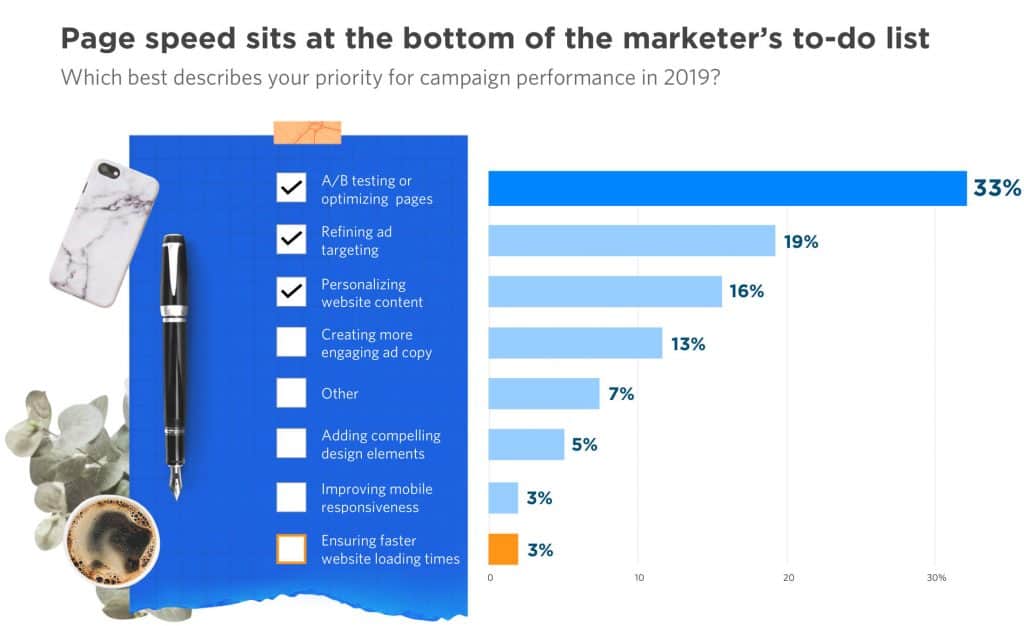
In The 2019 Page Speed Report Stats & Trends for Marketers report by Unbounce, improving page speed is dead last on the list of priorities for the marketers who participated in the study.
Only 3% of those involved said they would spend 2019 optimising to improve loading times.
Interestingly, A/B testing or optimising pages topped the list of priorities with 33% but it seems nobody has informed these marketers that creating faster pages is a pretty crucial part of optimising them for performance.
In fact, loading times are so far off the radar for the marketers that participated in this survey that “Other” came in as the fifth biggest priority for marketers this year with 7% – perhaps suggesting that just about every other conceivable thing on their to-do list is more important than optimising for mobile loading times?
Google Advocate Krista Seiden is quoted in the study and she sums up the conception of loading times quite nicely:
“Page speed is one of the most overlooked and yet most important factors in customer attention, retention, and ultimately, converting browsers to buyers. Ensuring that you’re taking measures to increase page speed or reduce lag can be the difference between failure and success.”
That sounds like loading times should be a priority to us.
What are marketers doing to improve loading times in 2019?
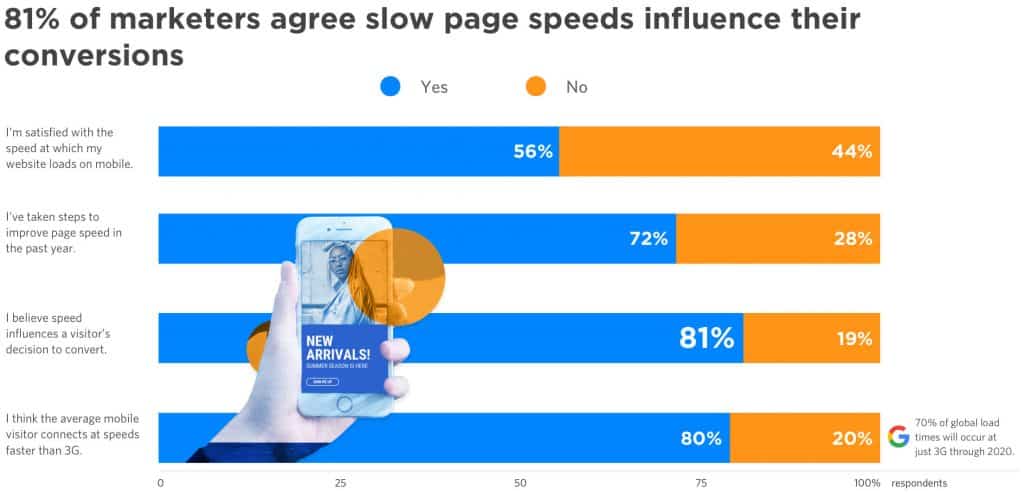
While only 3% of marketers in the Unbounce study say improving page speed is one of their priorities for 2019, a much larger 83% say they’re aware that slow loading times affect their conversions.
But what are marketers actually going about it?
Well, according to the report, the most common step taken by marketers is to optimise images, videos and other media files – more than half of respondents say they have done this.
Other methods aren’t being adopted so widely, though:
- 57% say they’ve optimized images, video, or other media files.
- 43% have implemented back-end fixes like improved caching and hosting solutions.
- 39% have run speed audits using Google Lighthouse or other tools.
- 38% minified or reduced their dependence on JavaScript and CSS.
- 22% implemented Accelerated Mobile Pages (AMP) in some capacity.
- 14% began using a Content Delivery Network (CDN).
We should be seeing much higher numbers for these very basic speed optimisation techniques in 2019. More worrying than anything, though, is the 19% of marketers who think page speed doesn’t affect conversions.
What’s going on with AMP?
Google has been pushing Accelerated Mobile Pages (AMP) hard over the past few years but Unbounce finds only 22% of marketers have implemented the technology. We’ve written about the pros and cons of AMP on our blog before and we’re certainly not suggesting everyone should rush to sign up.
In fact, the first thing to know about AMP is that you don’t need it to build faster web pages – you can do that yourself.
However, it’s still interesting to see why AMP adoption rates are as low as they are, despite some heavy marketing from Google and quite a lot of hype within the industry.
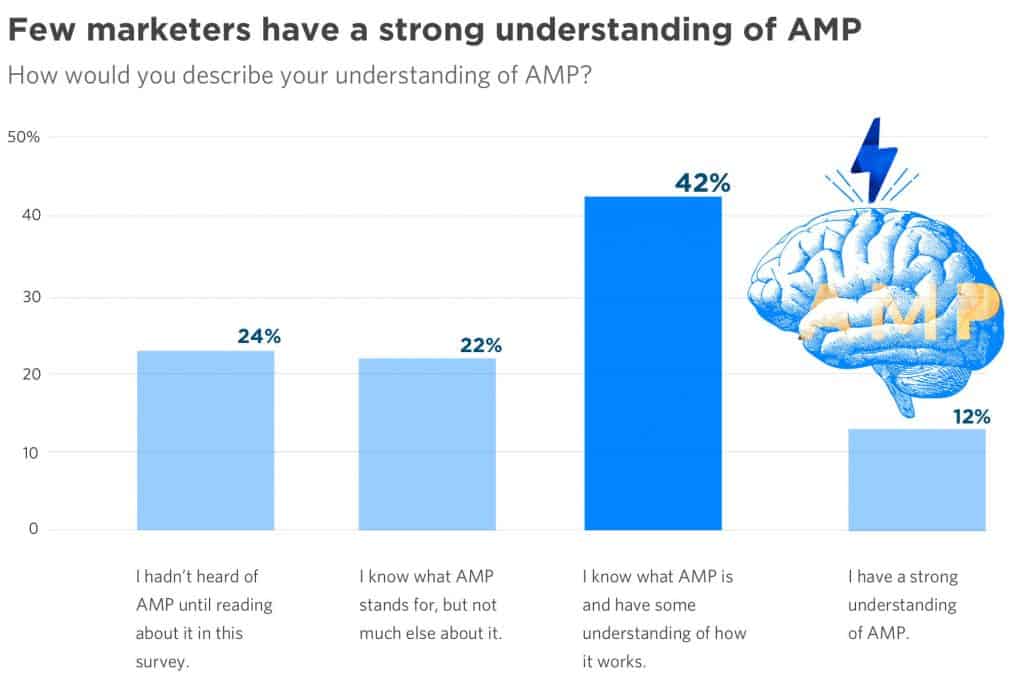
It turns out most marketers aren’t all that clued up about AMP to begin with and the vast majority of marketers have no plans to implement it (57% have no plans while 23% are still considering it).
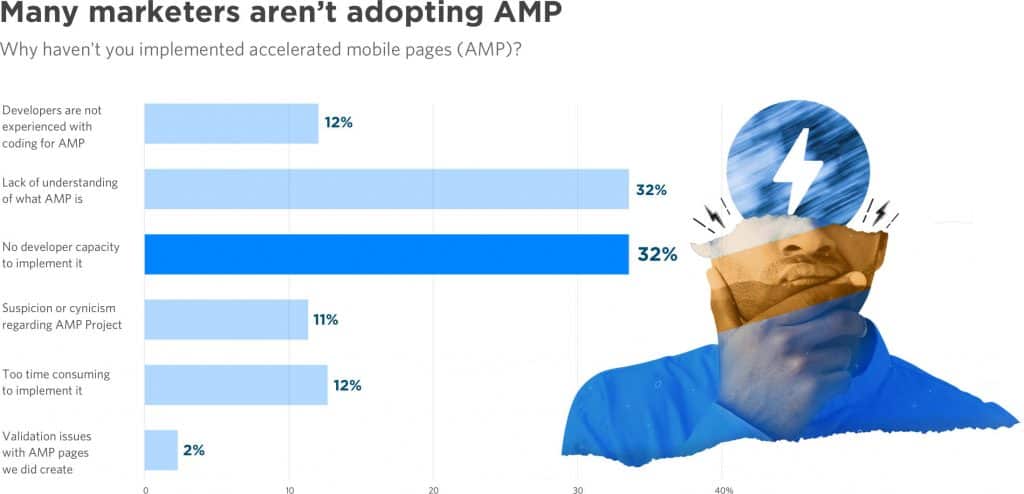
Essentially, the marketers involved in Unbounce’s report say AMP is too complex and there aren’t enough developers available to implement it for them. So it seems Google might have to spend less resources on marketing AMP to everyone and put a little more effort into making the technology easier to implement if it wants to see adoption levels increase.
As incredible as it is that loading times can be at the bottom of so many marketers’ priority lists, you only have to visit sites for yourself to see how painfully slow pages still are in 2019. Only 2% of the landing pages included in Unbounce’s study load within three seconds on a 3G connection (which accounts for 70% of mobile visits, according to Google insights).
Considering how much control marketers and website owners have over page loading times – compared to Google and Facebook algorithms, for example – it’s crazy that more aren’t doing everything they can to maximise performance where they have full control to access and data.