
Where does website traffic come from?
Traffic is the key commodity for every digital marketing strategy. By bringing a higher number of visitors to your website each day, you increase your opportunities to turn traffic into paying customers.

According to research by Databox, organic search is the top source of traffic (25+%) for online brands while ‘direct’ visits take second place (20+%). However, this only applies to companies that have built enough brand awareness and interest to generate such high levels of direct visits (sessions where users simply type in the URL of your website).
Most businesses are still trying to get to that point (99.3% of all businesses in the UK are classed as small businesses) by building brand awareness while generating traffic through a mix of other channels.
In this article, we look at the five key channels modern businesses need to generate traffic and power growth.
The role of content in digital marketing
Content is at the heart of every digital experience, whether we’re talking about blog posts, video content or the latest virtual and augmented reality technologies.
As HubSpot explains, “inbound marketing strategies that attract your target audience and buyer personas are tied to content creation and development.”
Content is the medium that brings traffic to your website from Google Search, Facebook and every other channel in your marketing strategy. It’s the message on your landing pages and in your email marketing campaigns that influences buying decisions. It’s the online documentation that keeps your existing customers happy.
Content marketing isn’t a traffic source in itself, but, as you’ll see from the five key traffic sources we look at in this article, it’s the vital resource that powers your inbound marketing efforts.
#1: Organic search (SEO)
Earlier, we looked at some figures from Databox that showed organic search is the biggest source of traffic for online brands. In fact, the number might be even higher than that with research carried out by BrightEdge last year attributing 53% of all trackable web traffic to organic search.
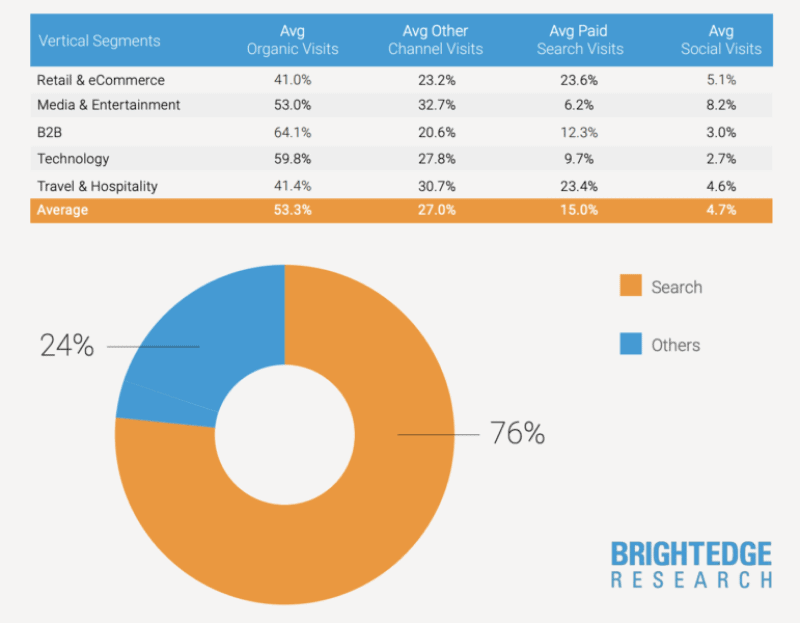
Whichever study you look at, organic search comes out on top at the most important source of traffic for online brands – so this should be at the centre of your digital marketing strategy.
To make the most of this channel, you need a comprehensive SEO strategy that identifies content opportunities to reach your target audiences and bring them to your site. As with all digital strategies, this starts with understanding your audiences and their needs, allowing you to pinpoint the keywords and search queries they type into Google or Bing when they need something from a brand like yours.
You’ll find most of this traffic will not buy from you on the first visit, as SEO tends to generate traffic from users who are looking for information. This isn’t always the case, but searches showing a purchase intent tend to trigger paid ads on platforms like Google.
#2: Paid search (PPC)
When users are clearly in buying mode, search engines like to cash in by showing ads at the top of the results page (among other locations). This is where paid search comes into the mix and, while it tends to generate less traffic than organic search, it also has a habit for generating traffic that’s more likely to buy.
There are two key reasons for this:
- Purchase intent: Paid ads typically show for searches that show a high purchase intent, meaning the user is more likely to buy now or soon
- Targeting: Keyword and additional targeting options on a platform like Google Ads allow you to pinpoint highly relevant audiences with a strong willingness to make a purchase
So, you’re essentially paying for a higher quality of traffic than you’ll often generate through organic search. There are always exceptions, of course, but search engines can only justify charging for ads by delivering traffic that has stronger purchase potential.
This doesn’t mean you can simply start paying for ads and expect the sales to roll in. Bringing traffic to your website is relatively easy, but turning paid visitors into paying customers is another challenge altogether – and one you need to overcome quickly if you want to create a profitable paid search strategy.
#3: Social media (organic & paid)
When Facebook’s popularity sparked the age of social media, a new inbound marketing channel emerged, shaking the entire industry. During the early years, social media presented a free channel for organic marketing that surpassed organic search, but organic reach on social platforms has declined heavily as platforms focused on paid advertising models.
So, in 2020, organic social media isn’t the channel it once was (it hasn’t been for many years) but there are a few major networks where you can still make things happen without paying for ads.
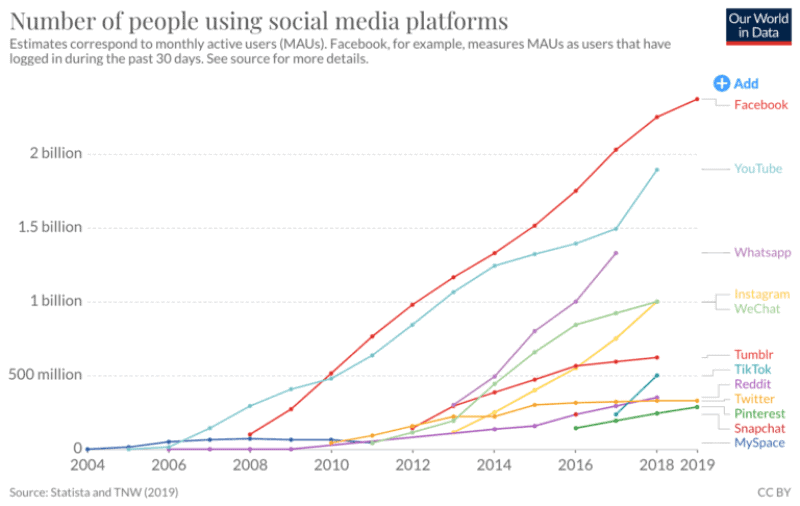
Twitter remains an effective organic channel after all these years, and it still boasts impressive engagement among an active user base. The only problem is Twitter never grew to the heights expected of it, and its user numbers hover around the 330 million region with little-to-no growth prospects.
You can still get organic results from LinkedIn, too, although both Twitter and LinkedIn have their own paid advertising offerings that will help you reach a wider audience and target more relevant prospects.
By the time we get to Facebook, there’s little organic reach left in 2020 and you really do have to invest in paid ads to make things happen on the network that started it all. Instagram is going the same way, with organic reach getting smaller every year, but the platform continues to grow and could become the top name in social media marketing.
Unless, of course, a newcomer like TikTok continues to grow at its current stellar rate, and shakes things up at the top of the pile. As things stand, the platform offers some interesting organic and social influencer opportunities, and it recently introduced its own advertising products.
For a more comprehensive look at the current state of social media, look at these two articles:
- What Does Social Advertising Look like in 2020?
- Which Paid Advertising Platforms Matter Most In 2020?
#4: Outreach (guest blogging, influencers, community leverage, etc.)
Each strategy we’ve looked at so far revolves around building your own audience. However, there are outreach techniques you can use to tap into existing audiences outside of your brand to bring those people to your website.
Chances are, you’ll be familiar with many of these:
- Guest blogging: Publishing your content on relevant, authoritative websites with larger audiences than your own
- Influencer marketing: Working with social media influencers who can promote your brand to their audience of followers
- Community leverage: Involving yourself in online (or offline) communities that include your target audience and interacting with them directly
- Press coverage: Getting your brand featured in major publications to build awareness and hype around your offer
- Networking: Engaging with industry experts and their audiences, either online via platforms like LinkedIn, or in-person
- Events: Attending or taking part in industry events, either online or at conferences
By reaching out to existing audiences online and in the real world, you can speed up the growth of your own audience while other strategies like SEO and PPC are doing their thing. These strategies will also introduce your brand to people that may never discover you through other channels, such as search or social media.
The key is to make sure you’re leveraging relevant audiences to your brand with a strong potential interest in your offerings.
Aside from building your audience and generating more traffic, outreach strategies are also high-effective for building your brand’s authority within your industry. In turn, this gives your content more clout and gives you greater power of influence to inspire purchase decisions when people engage with your brand.
#5: Offline channels
As we touched on in the previous section, it’s important to consider the power of offline channels and touchpoints across your digital marketing strategy. For example, both of the networking and events tactics we looked at in our list of outreach strategies are just as effective (arguably more so) in the offline world – at least, in the pre-COVID-19 days.
Even the most digitally grounded business can build a larger audience by attending industry events and getting their brand seen by in the flesh.
The importance of offline channels is even more important for businesses with a physical offline presence – especially if you need to welcome customers through the door. In fact, the divide between online and offline channels is constantly shrinking, and you can see this in strategies like local SEO where Google Maps searches turn to in-store visits.

Even via digital channels like PPC, ad formats like local inventory ads can turn online searches into store visits while call extensions can turn them into phone enquiries.
Bringing it all together
The five key channels we’ve looked at in this article for generating traffic to your website are the fundamental essentials of modern marketing. You need each of these to cover every opportunity and maximise the size of your online audience, regardless of which industry you’re in or the size of your company.
Depending on your business, you may need more niche channels brought into your marketing mix and there are always non-traffic strategies that need incorporating, too – such as conversion optimisation, lead nurturing and remarketing.
However, these five channels generate the traffic you need to power all your marketing strategies and it’s crucial that you get things started in the right way.
The challenge for modern businesses is maximising performance across all these channels. Each one of these is a specialist field, which means you’re going to need a team of experts, including SEOs, PPC advertisers, social media marketers and more.
Broadly speaking, you’ve got two options for bringing this expertise on board. Either you can build a team of experts for yourself or you can hire an agency to take care of everything for you.
If you want to learn more about the pros and cons of each approach or want to find out how an agency like Hot Click Marketing can help, you can call our team on 0161 870 2580 or reach us on social media through @hot_click.